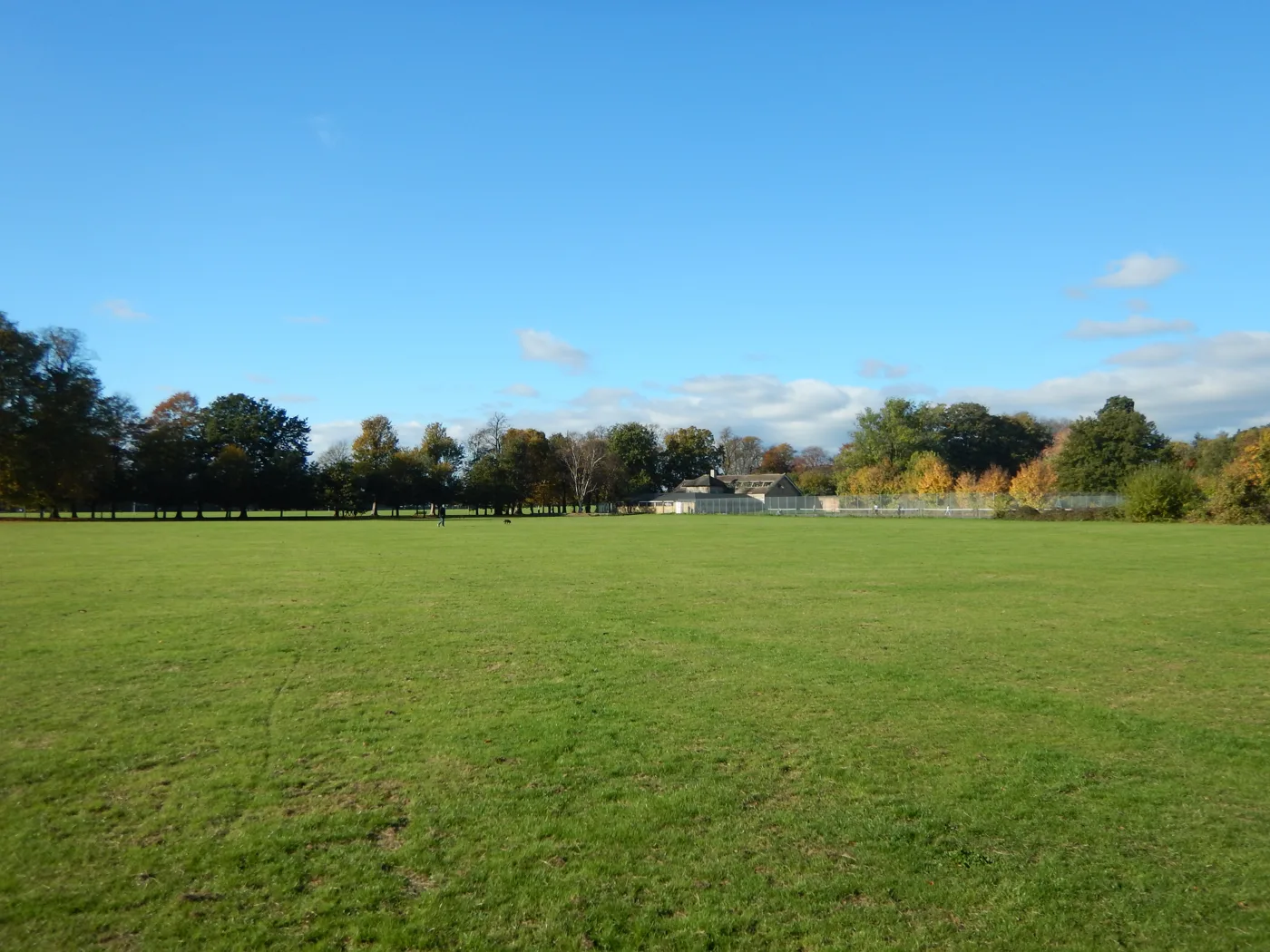

Up to 19 live event days a year at Gunnersbury Park until 2031, across 115 days of part closure. Councillors heard it on 3 September; no decision is published.
Hounslow’s planning committee spent its 3 September meeting on a scheme that would fix the shape of Gunnersbury Park’s summers for five years. The application asks to stage up to 19 live event days a year in the park between 1 January 2027 and 31 December 2031, with 115 days a year in total once set-up, inactive days, removal and trackway are counted.
Officers recommended approval. Three days later, the council’s planning register still records the application as “Registered”, with no decision notice issued, and the minutes of the meeting have not been published.
The park sits in the Chiswick Gunnersbury ward, on Chiswick’s north western edge, though its postal address is W3 in Ealing. It is the reason the noise reaches streets a long way from Popes Lane.
What the 19 days would actually allow
The application is reference P/2025/3274, registered on 27 November 2025. The officer’s report to the 3 September committee sets out what the permission would cover:
- up to 19 live event days in each calendar year, from 2027 to 2031
- 115 days a year in total, including set-up, inactive “dark” days, removal, and laying and lifting the trackway
- a maximum of 9 days for Band 1 events, with audiences of 20,000 to 29,999
- a minimum of 10 days for Band 2 events, with audiences of 3,500 to 19,999
- temporary structures, fencing, concessions and facilities, with no permanent infrastructure
Either Arena 1 or Arena 2 would be closed to the public from set-up to clearance, which is where the 115 figure bites. The trackway route would carry two crossing points, stewarded during live events and left open on inactive days.
The proposal sets no event timings. Those come from the park’s premises licence, which runs 9am to 11pm Monday to Saturday and 9am to 10.30pm on Sunday.
The committee asked for 8 big-event days. The revised plan has 9.
This is the second time the application has come to committee, and the detail of what changed in between is worth reading closely.
On 6 August, members voted by 11 to 2, with one abstention, to defer. The minutes of that meeting record that Cllr Tony Louki moved deferral so that members could consider the planning balance at fewer event days than the 22 then sought. He suggested 19 days, with 8 Band 1 and 11 Band 2. Cllr Vickram Grewal seconded it.
The applicant came back with 19 days. The split is not the one the motion named. The amended scheme allows up to 9 Band 1 days and at least 10 Band 2 days, so it permits one more of the largest events than the deferral motion suggested, and one fewer of the smaller ones.
The council’s head of development management, Matthew Rees, had told the meeting why this had to happen by deferral rather than by amendment: applications cannot be negotiated at planning committee, so members’ only choices were to approve as submitted, refuse, or defer and let the applicant revise.
The recommended condition still says 22
There is a straightforward discrepancy in the papers that went to the September meeting. The report argues throughout for 19 live event days. The recommendation section, at Condition 1 (TL01), still reads:
22 live event days per calendar year, with a total of 115 days including set-up, inactive and removal days is permitted between 01 January 2027 and 31 December 2031.
Condition 1 is the operative control. It is the number that would bind the park for five years, and it is the number an enforcement officer would work from. The addendum report published the day before the meeting amended Condition 3 and added an informative about Cadent Gas apparatus, but did not touch Condition 1. It reads as a drafting error rather than a change of position, but it is the sort of error that decides arguments three summers from now.
How this compares with recent years
The report’s own table gives 9 live days and 62 total days in 2024, 15 and 97 in 2025, and 1 and 18 in 2026. The proposal is therefore a step up on any recent year, and roughly a quarter more live days than 2025.
Noise: lower limits than the licence allows
The noise limits are the part most residents will judge this on, and they have moved downwards through the process.
The permission would cap off-site music noise at 73dB A weighted and 88dB C weighted for Band 1 events, and 70dB A weighted and 85dB C weighted for Band 2. The original application asked for 90dB C weighted, so bass is 2dB lower for the biggest events. A separate Band 3 category, at 65dB A weighted and 90dB C weighted, has been folded into the amended Band 2.
Officers note that the licence for the 2026 BST concerts in Hyde Park sets 75dB A weighted, and that the recent planning decision for Brockwell Park set 75dB A weighted and 90dB C weighted. On that comparison, Gunnersbury’s proposed ceiling is below the London norm.
Monitoring would run from four fixed continuous points inside the park at every event, plus up to three more chosen for each event according to stage orientation, audience size and the wind on the day.
At the August meeting, the planning officer confirmed two further points. A permission would carry a condition removing the park’s permitted development rights, so the operator could not run 28 days a year at higher decibel levels alongside it. And the land would have to be restored to its pre-existing condition after events, with a phase two ecological survey submitted within six months of any approval.
What the objectors asked for
Three rounds of consultation have run. Residents and organisations were notified again on 12 August 2026 and five site notices went up the same day. By the time the addendum was written, 39 objections from 43 individuals and 10 letters of support had been received.
The recurring objections, as summarised in the papers, are the length of the permission, the loss of public access, bass noise, traffic on Lionel Road and Popes Lane, litter and anti-social behaviour, and pressure on the park’s grounds and wildlife.
At the August meeting the West Chiswick and Gunnersbury Society, represented by Marie Rabouhans, said it was not asking for refusal but for modification: 18 event days rather than 22, and a three-year permission rather than five. She told members that major London parks such as the Royal Parks usually host eight to ten events a year.
Peter Bainbridge, chair of the Gunnersbury Park Garden Estate Residents Association, asked members to refuse, arguing the scheme handed the operator a free hand until 2031.
Cllr Joanna Biddolph, who represents Chiswick Gunnersbury ward, also asked for refusal. She told the committee that noise complaints had been received from as far away as Hammersmith, 2.4 miles from the park, and that measuring sound by decibels alone was inadequate because bass produces vibration. She asked for 2027 to be run as a trial year with festival-by-festival applications.
Why the park says it needs five years
The financial case is set out in the report and was expanded at the August meeting by David Bowler, chief executive of Gunnersbury Park CIC.
- Events generated about £950,000 for the park in 2025, from 15 event days.
- Commercial income, including events, retail, parking, property rental and weddings, is now over 66% of the park’s budget. The councils’ service fee is about 20%.
- Total public funding in 2025 was £500,000, and Mr Bowler said the real value of Hounslow and Ealing’s funding had fallen by 48% since 2018.
- The park has to be self-financing by 2028 under the ten-year plan agreed with the two councils.
- £1.8 million of cyclical repairs falls due in 2027.
- Waterworks Festival and at least one other event were lost in 2026 because promoters could not insure against the risk of annual planning permission being refused.
Mr Bowler said five years was the shortest window event promoters would work to, and that a three-year permission would in practice be a two-year permission with a reapplication, given the 2028 funding cliff.
What it means for you
If you live within earshot, the practical change is not the number of events but the certainty. A five-year permission ends the annual application, and with it the annual chance to comment on each summer’s programme. The council’s answer to that is the conditions and the premises licence, which sit outside planning and can be reviewed separately.
Three things are worth knowing now:
- Noise concerns go to the CIC’s community liaison manager, before, during and after events. That route is named in the council’s own response to objectors, and complaints logged there are the evidence base for any future licence review.
- The premises licence is the other lever. It was called in for review in December 2025 and amended after a licensing panel hearing in March 2026. A breach of its conditions can trigger a further review, which can end in the licence being lost. Breaches of planning conditions can go to court with unlimited fines.
- Nothing is settled until the decision notice appears. Check the application on the council’s planning register under P/2025/3274. Our Chiswick planning news page tracks the bigger local applications, and the Chiswick roadworks and travel page carries the closures and traffic orders that come with big events.
We asked the council’s own register rather than relying on any report of the meeting. As of 6 September 2026 the status is unchanged and no decision notice has been issued. We will update this article when it is.
Frequently asked questions
How many festival days would Gunnersbury Park be allowed?
Up to 19 live event days in each calendar year from 2027 to 2031, with a maximum of 9 days for events of 20,000 to 29,999 people and a minimum of 10 days for events of 3,500 to 19,999. The total occupation of the park, counting set-up, dark days, removal and trackway, would be 115 days a year.
Has the application been approved?
No decision notice has been issued. Hounslow’s planning committee considered the application on 3 September 2026 with a recommendation to approve, but the council’s planning register still showed application P/2025/3274 as “Registered” when it was checked on 1 October 2026, four weeks after the meeting. The minutes have not been published, and the committee’s 1 October meeting, where they would normally be agreed, was cancelled.
How loud can the events be?
The permission would cap off-site music noise at 73dB A weighted and 88dB C weighted for the largest events, and 70dB A weighted and 85dB C weighted for Band 2 events. Officers point out that the 2026 BST concerts in Hyde Park are licensed at 75dB A weighted, and the Brockwell Park planning decision set 75dB A weighted and 90dB C weighted.
Who do I complain to about noise from the park?
The council’s response to objectors names the CIC’s community liaison manager as the contact before, during and after events. The park’s premises licence is a separate route: it was called in for review in December 2025 and amended at a licensing panel hearing in March 2026, and further breaches can trigger another review.
Could the park hold events without planning permission?
The addendum states that the Town and Country Planning Order allows a change of use for up to 28 days a year without planning permission. Officers told the August committee that any permission granted would carry a condition removing those permitted development rights, so the two could not be run alongside each other.
Sources
- Committee report for Gunnersbury Park, application P/2025/3274, Hounslow planning committee, 3 September 2026 for the proposal, the 19 and 115 day figures, the event bands, the noise limits, the monitoring points, the year-by-year table, the financial figures and the recommendation and conditions.
- Addendum report, Hounslow planning committee, 3 September 2026 for the updated objection and support totals, the amendment to Condition 3, and the absence of any amendment to Condition 1.
- Minutes of the Hounslow planning committee, 6 August 2026 for the deferral vote of 11 to 2 with one abstention, Cllr Louki’s motion naming 19 days with 8 Band 1 and 11 Band 2, the officers’ evidence on permitted development rights, restoration and ecology, the objectors’ submissions and the CIC’s financial evidence.
- Hounslow planning committee agenda, 3 September 2026 for the meeting papers.
- Hounslow Council planning register, searched for P/2025/3274 on 6 September 2026, for the registration date of 27 November 2025 and the application status.
Have your say